
• Skip to primary navigation
  • Skip to main content
  • Skip to primary sidebar

Islamic Estate Planning Attorney

Islamic Inheritance

  • Home
  • About Ahmed Shaikh
  • Islamic Inheritance Calculator
  • Education
  • Contact Us
  • Blog
  • Show Search
Hide Search
You are here: Home / Blog

Blog

Upside-Down Islam Project

August 9, 2019 By Ahmed Shaikh

Upside Down IslamThere is a process Muslims in the United States should know about, the creation of a sort of upside-down Islam. Upside-down Islam is empty and horrific and designed to take away meaning and purpose from your life. It is not the opposite of Islam or the other side of a coin. It’s a sucking machine.

I write a lot about Islamic Inheritance, which is a religious obligation, indeed an act of worship that depends on our religious freedom. Many other countries do not have enough religious freedom to allow for a basic form of religious devotion. The United States does have enough religious freedom, so Muslims can worship Allah by planning their estates based on His rules. Religious freedom is not something we can or should take for granted. Governments have taken away this right before in other places.

Go Left, Young Man (or Woman)

There has been a trend with Muslims making alliances with the political left of the United States. Aligning with the left makes sense since open hate of Muslims and Islam is an orthodox position on the political right, which is increasingly focused on white grievance politics. You don’t have a political “home” there unless you are a masochist. There are Muslim Republicans out there, I know one who goes to their events and gets invited to actual white nationalist group meetings. But what if the political left embraces Muslims only to get them to abandon everything they believe? What if it eventually becomes a shell of a religion where “Muslim” is just what you call yourself. It’s just a word and an empty one at that. No creed, no rules, nothing left to distinguish it from whatever else there is out there. The goal is to move you from Islam too, well, upside-down Islam.

What Kind of Religion is This?

I remember going to a reform Jewish funeral years ago sitting next to a colleague who was an orthodox Jew. The Rabbi told all of us gathered that “our God… is not a perfect God.” To my practicing Jewish colleague, this was crazy. What is G_d to this Rabbi he wonders? Is he some bumpkin who just slipped on a banana peel? How does this qualify as Judaism to him, much less an actual religion? Those who think of Judaism as a religious tradition can slowly find their rights threatened unless people have respect for those traditions. A movement within a loosely-defined “faith tradition” that takes the position God is a clutz is not a threat to religious freedom. When those people are the representatives of the faith with political leaders and the media, well that may be a problem. Unless their community is vigilant (and to their credit, they are), they may find circumcision, or kosher slaughter is forbidden. Many countries have banned Jewish rules of inheritance (like Islamic Rules). Why? It is easy to ban religious practices when most people in the affected religion don’t care or become hostile to the practice.

Beliefs and Values Matter

We did not have issues like the one I saw in the Jewish funeral within the American Muslim community back then that I can remember. That has changed. There are now well-established organizations of Muslims who care not one wit about Islam, the religion. Have a different Prophet after Muhammad (ﷺ) ? Is what Allah looks like dependent on your gender politics? Is a concept like fahisha just a conspiracy from the Patriarchy Industrial Complex? Are the words “man” and “woman” just a matter of opinion that has no theological or religious significance at all? You are all welcome to not only be considered a Muslim but to lead us and speak for us. It does not matter who funds you or what your agenda is. You are part of us. We don’t seem to distinguish between Islam and upside-down Islam.

We should also treat people who identify as LGBTQ with dignity and care about the rights of other faith communities or those who espouse no faith at all. However, a project like upside-down Islam is different. The goal here is to make it ok to mock Islam, its rules and traditions within our spaces. Upside-down Islam is a “reform” effort designed to make us indifferent at best, and hostile at worst, to our religion.

The “Muslim Brief” at the Supreme Court

As an example, I recently wrote about a Supreme Court brief by “Muslim Groups” on MuslimMatters about how “sex” should be treated like “religion.” It was a scam by a non-Muslim funded astroturf group. Muslim groups participated in this effort; some were gullible and naturally sympathetic to LGBTQ identifying communities. With some exceptions though, the list of scammed groups that (or who willingly went along) is unimpressive. It was gratifying how many Muslim groups did not sign on to this.  Please read the article here.

I became an Islamic Estate Planning Lawyer and developed an expertise in Islamic Estate Planning understanding many American Muslims don’t care about the subject. Indeed many Muslims, including those that regularly go to the Masjid, had never even heard of it. As we know from a Hadith, Islamic Inheritance is half of all useful knowledge.   This is knowledge the ummah will forget.  It is also the thing “Muslim reformers,” promoters of upside-down Islam are most hostile. But that is not the only thing these folks want us to chuck from Islam. They will (and have) come after basic aqidah (creed), and turn haram into halal and halal into haram. The project is from merchants of ignorance who seem to want Muslims to hate Islam. Don’t buy what they are selling.

There is no Islam without Right and Wrong

Muslims do not have a shared experience for the most part (our tribes did not wander in the desert). Nor can we pretend to have a single ethnic or racial identity. Muslims come from many different places with many different experiences. Without Islam, the creed, the scripture, history, and rules, it is doubtful there is much of anything keeping us together. We have what Allah commanded us to do, worship Him. Here is no priority higher than that. We organize our lives our families and how we earn a living based on this requirement to worship. Allah has also told us to command what is good and forbid what is evil. There is no Islam without that. If there is no good, no evil, if everything we believed is defined away into nothingness, what is the point? For those who oppose Islam and us practicing it, the purveyors of upside-down Islam, that process is the goal. Make the religion a pointless set of rituals where we have no real fixed beliefs or values.

If you think your religion means something to you, focus on implementing it in your life and with your family. Hold Muslim leaders accountable when they falter and don’t support Muslim groups going along with this project.

About Justice and that Non-Muslim Child

July 11, 2019 By Ahmed Shaikh


Non-Muslim child and Islamic InheritanceRecently in Dubai, which follows Islamic inheritance, denied a 14-year-old daughter from the UK with her share, on account of her being a Non-Muslim (specifically a Christian).  The daughter herself and her mother claim to be Muslim.
So what happened? An apparent injustice that does not appear to have much of anything to do with Islam. This discussion is not meant to air out someone else’s family drama. It is relevant to you and your family — the underlying problem here and how this specific injustice is prevalent. Note though, this is from public reporting and may not be completely accurate, but it’s still useful.

Here is an outline of the story as I understand it: a man was married to women, had a child, and then left his first wife and married another wife. So far, a common scenario. His daughter lived in the United Kingdom, he lived in Dubai, then died there. Now the ex-wife and the widow did not like each other very much. No big surprise. The ex-wife wondered out loud why her husband would leave her for a woman she thought looked like a horse. In Dubai, it seems, likening the appearance of a woman you don’t like to a member of the animal kingdom can land you in jail.

Another consequence to this is that somehow the potty-mouthed women’s daughter (and the dead man’s) is declared a Christian. So may this makes no sense to you. Legal systems can be wacky, and injustices can take place in them.

Declaring someone a Non-Muslim can be a pretext for something else

Here is the thing though that makes this case relevant for Muslims who live in places like the United States: Claiming an heir is a “non-Muslim” is often a convenient solution to challenges in family politics, personal grudges, perceived past slights and virtually anything that makes being in a family painful for some.

So in some significant ways, the actions taken by the court in Dubai is not that different from the kind of things Muslim families will request that I do for them: exclude a family member. Of course, non-Muslim family members cannot inherit under the Islamic Rules of Inheritance. So telling me someone is a non-Muslim is a way to disinherit them. It’s also not a court ruling like in Dubai. We don’t even need to pretend to have an objective hearing about the issue.

The Trap of not knowing

A non-Muslim cannot inherit from a Muslim. This phrase comes from a hadith and also a principle in Islamic inheritance law. It also does not mean that a non-Muslim child cannot get anything from a Muslim parent after death since a wasiyyah is available. In this particular case, it would be impossible for a parent to know that a 14-year-old child, who is an heir in Islam and thus ineligible for a wasiyyah, would be declared a non-Muslim by the court.

But what happens if a father in the dark?

Example:

Hamza, a Muslim and Stacy, a Christian, got a nikah as juniors in high school. They had a child together, Brianna. Hamza started to become more religious and divorced Stacy, who never converted to Islam. Hamza and Stacy had a bad breakup. Hamza moved thousands of miles away, marrying a different wife and had several additional children. He never saw Brianna after the age of 2. Brianna is now 13 years old. The question is, does Hamza regard his daughter as Muslim or not?

If Hamza does nothing, Brianna is likely to be forgotten. Yes, there is an intestacy statute in every state, which theoretically protects Brianna. However, Hamza’s marriage to a woman who is not Brianna’s mother may trump legal protections under state intestacy law. Under most circumstances in the United States, everything goes to the surviving spouse, even if that result is unjust. If he is going to follow Islamic Inheritance, he needs to do an Islamic Estate Plan.

If Hamza plans, he needs to know if he is going to name Brianna as an heir in Islam, a beneficiary in the wasiyyah, or if he is going to exclude her completely.

Dangerous to Assume

I know of a situation where a single non-Muslim mother was raising her child as a Muslim, even paid to have him attend an expensive Islamic School. Her son’s father left her many years ago and had no relationship with the child or mother. That did not matter to the mother. She thought it was important to raise her child as a Muslim even though she was not a Muslim herself. Just because there was a divorce and the non-Muslim ex-wife hates her Muslim ex-husband does not necessarily mean she hates his religion. It may, but it’s ridiculously dangerous and potentially grossly unjust to assume this is the case.

I wonder about that situation: does the father know the son is Muslim? Does he care? If he dies, does his Muslim son get any inheritance at all?

What are Islamic Values Here?

The one thing that we need to understand is at the core of this is family obligations. You cannot cut off family ties.

People like to be the heroes in their own stories. Sometimes, people may come to someone like me to figure out how to get an “Islamic” stamp of approval when they commit an injustice. Sometimes, they go to a Judge in Dubai.

The Quran mandates inheritance to heirs. Yes, this is not absolute, and people can and even must exclude people from shares when they are non-Muslim. However, you better be sure.

To set up an appointment with our office and schedule an Islamic Estate Plan, click here.

Podcast: Corruption of Muslim Nonprofits

June 28, 2019 By Ahmed Shaikh

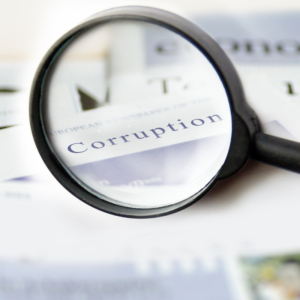
Corruption Among Muslim Nonprofits and Leaders The problem with corruption is not so much that people are corrupt; it’s that we tolerate corruption, embrace it even. It’s part of being in polite society. Corruption usually does not affect you directly; why not stay silent? But we don’t necessarily stop and think about the consequences this will have for future generations of Muslims. They may well grow cynical of how nonprofits and their leaders abuse Islam. There is also the real harm caused by victims of corruption.

This week I was invited (for the third time) to an episode of the Mad Mamluks, a well-known Muslim podcast. We discussed the recent Muslimmatters article on the abuse of Zakat by Muslim nonprofits, but also discussed corruption more generally. We even talked about my book on Islamic Estate Planning a little.

To listen to the podcast (or video of the podcast), click here.

Hajj is Coming

If you have any friends or family heading out to Hajj and want to get their affairs in order, they can set an appointment for Islamic Estate Planning through this link.  It is vital to make sure that before you go, you don’t end up doing an injustice to anyone.  Here is a link to learn more about Islamic Inheritance I hope you will share.

Everything is “Zakat-Eligible” Now

June 12, 2019 By Ahmed Shaikh

Zakat Eligible What does Zakat-Eligible mean?

I have served hundreds of clients over the years with Islamic Estate Planning.  This means providing advice on all kinds of assets and integrating planning with values.  One of those values, indeed a fundamental act of worship and a pillar of Islam, Zakat, seems to be on the verge of crumbling into nothingness.  This is a fundamental value for Muslims.  Don’t let it slip away.  Unfortunately, there are no uniform standards and charities can do or say whatever they want.  So you need your own standards.

Asking for Zakat

I occasionally write on a website, MuslimMatters.   They started to ask for Zakat since they count what they do as “dawa” (though not everything is, that is another story) despite my prior criticism of non-profit corporate practices in the past.  Zakat has become a way for the affluent to donate to benefit the well-off.  We forget the poor and needy.  They don’t often fit into the plans of many nonprofits who want Zakat funds to pay their overhead.   Indeed, if Zakat were distributed efficiently, as my recent article shows, poverty could be eliminated completely.  Obviously, it has not been.

My article, written with Sh. Osman Umarjee (who has partnered with me on other Zakat articles) is entitled “This Article Could be Zakat Eligible.”  Please check it out and share it with your friends.

Advice On Selecting Charities

You should not rely on other people (including Shuyukh) to tell you where to donate.  It is rare that an Imam is going to go vet a charity’s finances and overall strategic plan.  Most of the time, endorsements will be in the “he is a good brother” genre of recommendations.  That should frankly not be good enough.  There are no real standard accreditations for Zakat-eligible, literally, anyone can slap that label on themselves for practically anything perceived to be a social good.  There are no standards, no accountability.  However, you should have your own standards.

A few things to look for when evaluating charities

  1. Does the charity publish Zakat distribution policies?
  2. Is everything the charity does Zakat eligible? Stay away.
  3.  Does the charity have a policy on segregating Zakat funds?
  4. Does the charity have a policy of not using Zakat funds for overhead? This is not a deal killer, it may be part of having a sustainable operation and Allah expressly permits it in the Quran.   If there is an endowment that pays for overhead or if it is a small, well-run volunteer operation, bonus points.
  5. Are there independently-audited financial reports? If they do, read it or have it read by a trusted friend who likes reading these things.
  6. Read the organization’s 990, is something out of whack? Note Masajid don’t file 990s.  However, they should make their financials available if you are going to donate to them.
  7. Does the charity use Zakat funds only to benefit the poor and needy (that may include services)? There are other legitimate criteria, but you should focus on the poor and needy when there are so many.

Not for the Charity’s Agenda: Make it about your values

May 31, 2019 By Ahmed Shaikh

Charitable PlanningAs Ramadan is rapidly passing us by, you may have had a massive number of solicitations from charities in your email box, your mailbox, social media and old fashioned phone calls (if anyone still does that).

Charity is more than an act of worship through.  It is an expression of your values.  It is also an expression of your legacy, what you leave behind in this world, of course, includes charity that continues.  You cannot take your wealth with you.  When you give in Sadaqa Jaaria (continuous charity), your wealth continues to benefit you.

What if your charity was more than just supporting the mission of someone else’s vision, as laudable as it may be?  What if supporting charity was more about the legacy you want to pass on to your family?

Charity is a learned behavior.  You can raise children to care about charity, or you can raise them not to.  As they become adults, many people want their children to be involved in ongoing charitable projects.

Charitable Planning can also include financial planning.  The tax code looks at charitable planning much more favorably than most people realize.  While a lot of this benefits the wealthy, it’s still worth looking at for everyone.  People can become more wealthy as a result of doing charitable planning.  They can also become shallow, mean and obnoxious.  It happens.

I wrote an article on Islamic Charitable Planning that will give you a rundown on Charitable Remainder Trusts, Supporting Organizations, Donor Advised Funds and Charitable Lead Trusts, among other issues.  Please take a look if you are interested.  Feel free to share with others as well.


  • « Go to Previous Page
  • Page 1
  • Interim pages omitted …
  • Page 14
  • Page 15
  • Page 16
  • Page 17
  • Page 18
  • Interim pages omitted …
  • Page 25
  • Go to Next Page »

Primary Sidebar

“Learn about the fara’id (Islamic Inheritance) and teach it to the people”- Hadith

Get our free Islamic Inheritance Resource Guide, including templates and the know-how you need to start protecting your family.

Download it now.

Recent Posts

  • On Blogging Theology on Charity
  • Private Retirement Plans for Muslims: A California Legal Exemption Strategy
  • Free Loans for Muslim Family Members Have Secret Interest, Not Riba
  • Muslim Burial Challenges
  • Can You Inherit A Masjid? (Why It May be Reasonable to Think So)

© Ahmed Shaikh, Attorney at law. No legal services or advice provided without a written agreement.

  • Home
  • Islamic Estate Planning
  • Blog
  • Library
  • Contact Us