• Skip to primary navigation
  • Skip to main content
  • Skip to primary sidebar

Islamic Estate Planning Attorney

Islamic Inheritance

  • Home
  • About Ahmed Shaikh
  • Islamic Inheritance Calculator
  • Education
  • Contact Us
  • Blog
  • Show Search
Hide Search
You are here: Home / Blog

Blog

Health care Directive: On Muslims Pulling the Plug

September 29, 2017 By Ahmed Shaikh

What instructions should Muslims put in their Advance Healthcare Directive (sometimes known as a living will)?  Consider this example.

Abid has a car crash. A serious one. Among other medical problems, he is unconscious.  In a hospital bed.  As the days go by, doctors start to lose hope.  They do some tests and take the position that Abid is in a vegetative state.  He can breathe on his own.  His heart’s functioning so he does not need any machines to make that work.  However, doctors believe his brain is showing that he is vegetative.  They tell the family that he needs food and water, so he needs a feeding tube.  However, it may be best to just stop the food and water and let him die.  What do you do if Abid is in your care because of an advanced health care directive?

This is a serious issue many Muslim families grapple with in their own Estate Planning.  The question always comes up: “What does Islam say.”  Is there something definitive in how we do our advanced health care directives and living wills?  Well here is what is happening.  The proposal is to deny a sick, hungry person food and water.  Could that be the most compassionate thing to do?  Or could it be cruel?  What if there was no way for you to know the difference? 

Here is some more information for you:  There is no scientific test that measures of consciousness.  There is often no way of knowing if a sick person knows what is going on in the world around him or her or not.  It is possible to be in a coma for 15 years and then wake again with a brain just as sharp as it was 15 years before.  It is unclear what “vegetative state” actually means in all cases, but there is a general idea (and definitions, which may not help if a person walks out of the state and takes up piloting airplanes). 

But if you were doing your own planning, in an Advanced Healthcare Directive for example, what might you say?  Common answers are “I don’t want to be a vegetable,” or “pull the plug.”   But what if there are no machines keeping Abid alive except a feeding tube?  What if it’s the case that the term “vegetative state” is a largely meaningless concept?  

Unfortunately, I don’t have an answer for you as to the “right” decision to make in such a situation.  What I can do is suggest some guidelines:

  1. You need to have family or friends that you name who would have the ability to make health care decisions for you in the event they cannot make it themselves.  This is an enormous issue and there is a whole lot of doubt and while there are doctors involved, the science is far from precise much of the time.  
  2. Those loved ones you trust should then have someone with religious knowledge and experience in these matters. Of course, it is your loved ones who make the decision about your treatment, not the people they consult with.

It is doubtful to me if there is much utility in stating in a document, in advance, if you want to continue being treated or not continue being treatment under certain vague circumstances in an advance health care directive.  The California Advance Health Care Directive form says for example  “ I become unconscious and, to a reasonable degree of medical certainty, I will not regain consciousness.”  Since basic questions like what consciousness is exactly and how you can determine it is not known, the language does not necessarily help.   You don’t know the nature of the healthcare decision you are making just because you cannot see the future.   

The best thing you can do is give the right people respond to make decisions for you, just like you would with the rest of estate planning.

Get our free resource guide on Islamic Estate Planning, including templates and articles by clicking here.
Protecting your home from lawsuits

June 1, 2017 By Ahmed Shaikh

While this website is about the Islamic rules of inheritance, a common goal for many families is to safeguard their assets, and their residence, if they get sued or some other financial calamity comes around.

I will focus very much on other assets here (I am sure I will write about them later), but rather, we will discuss the family home.

Creditor Friendly

California is a creditor-friendly state. What I mean by that is that California law tends to be raked to favor creditors whenever possible, including when it comes to the personal residence. So if you have some money, or, more importantly, equity in a home, and there is somebody that you owe money because of a court judgment, that person will probably be able to take that money, and that means making you leave your home.

Now if you had done a revocable living trust consistent with the Islamic rules of inheritance (and you should) one thing that does not happen is any asset protection at all, at least while you are alive. Your assets have the same level of protection from lawsuits that they would have had without doing a revocable living trust. You do it for other purposes, such as inheritance and incapacity planning.

Now obviously, you do not want to leave your home.  Now if you had some cash, a business or other assets, there are a broad range of asset protection planning opportunities that you can use. Some of them may be in California, some of them would be outside of California. However, the home has a very limited level of protection, something called the homestead exemption.

About the homestead exemption

For most California homeowners, the homestead exemption is quite small.   It ranges from $75,000 for single people to $150,000 for the elderly on a limited income. What this means is once you get evicted from your home, you get to keep a limited amount of the money that comes from the equity in that home. The rest of it goes to the creditor.

If you have accumulated significant equity in your home, like many California families, the homestead exemption offers inadequate security.

Out of State Trusts

One other option is placing the home in a trust in a jurisdiction that provides asset protection. If you have a home in California, this may or may not work. It may not work because the home is on property in California, and theoretically a judge can just transfer the property over to the creditor. Of course, if you have assets that are not in the reach of a California judge, this could be a good option, though with some caveats that are outside of the scope of this post.

Equity Stripping

Another method some people have heard about involves a process of stripping the equity from your home into an out-of-state entity. So you are creating the out-of-state entity, however, having a judge transfer the property over to a creditor would not do much, since there is no equity in it.   The problem with this tactic is that it typically involves getting a commercial loan. Loaning the money to yourself, even through a business entity, is not likely to work.  There would be a deed of trust that evidences this loan.   The idea is that a judge cannot simply undo a deed of trust that is held by a commercial lender you don’t own or control.

The cash that came from the proceeds of the loan may be somewhere safer than California.   The person who took out this loan pays it back, with interest.   Of course, the money can be invested in something that potentially pays a better return than the interest rate. However, given that this is a post meant for Muslims, we need to discuss the elephant in the room, interest.

While many people will take out interest-based loans for their mortgages and can perhaps even point to fatwas that say it is fine for them to do this, while others will disagree, we are still dealing with interest.  Now, it is possible that someone can get a sharia-compliant loan and do this procedure, there won’t be a problem.  However, there are no scholarly opinions that say an interest based loan for an asset protection plan based on equity stripping is halal.  A major downside is you need to always be in debt.  Maybe you don’t mind, which is fine.

So, equity stripping is a real option for many people, even Muslims.  Just use a sharia-compliant lender.  It does not protect the home per say but makes it far less likely anyone would want it.

Qualified Personal Residence Trust

This is another option for protecting the home without getting a loan. It is far less complicated, though there is a (small) cost.  After a few decades, you end up paying rent to your children.

The way this works is that you get a trust that splits the interest in your property with you holding it for a period of years (you determine the number of years) and in the remainder, goes to a trust for the benefit of your children. It does not go directly to your children but stays in trust.  If you survive past the number of years that you have designated, you need to pay fair market value rent.

This method, which is primarily designed for estate tax planning, is effective because an asset that is only yours for a period of years is not especially attractive.  They would not know what to do with that. Now if your children were sued, it would not affect you or them. The beneficiary is a trust, remember. It is not your children directly.

There are hundreds of thousands of lawsuits in the United States every year. If you are a business owner, a physician or if you have any regular interactions with people where you may be subject to lawsuits, you do want to make sure that you do whatever it is that you can to protect your home for yourself and for your family.   Of course, you do all of this keeping in mind Islamic rights and ethics.


FAQs on Islamic Institution Trusts

March 16, 2017 By Ahmed Shaikh

I recently did an article at muslimmatters.org on protecting Islamic Institutions by creating a California Trust.  Make sure you read it.  Here are a few questions that some have asked me, and I am posting these as a FAQ.

What does this involve?
In short, you would be creating a subsidiary organization that acts as a shield to protect donor intent to protect your charitable assets. So, if your organization no longer exists, your assets can be available for use by an organization that has the same or similar purpose. If you are a Masjid, your assets can continue to be used for another masjid.
What kind of assets are we talking about here?
Any assets that are long-term in nature, such as real property or financial investments.
Does this mean that we are giving up control of the assets?
It depends on what you mean by “giving up control” since you are giving it to a separate nonprofit organization, though your organization appoints a majority of the Trustees. The assets given to this trust are for the benefit of your organization.
Why are you advocating doing this through a trust?
Trusts are the best vehicles for documenting and enforcing donor intent. So if you have property that is genuinely a waqf, you will want to make it harder to change its purpose. If you organize a nonprofit as a corporation, future boards can easily alter bylaws.

Also, the state attorney general has jurisdiction over charitable trusts. This fact may become useful.
Does the Attorney General of California have jurisdiction over religious corporations?
No. Religious corporations represent an exception to the Attorney General’s jurisdiction. Another reason we recommend trusts.
What kind of decisions do we as an organization need to make?
A Board of Directors will need to make several decisions. Among them, what assets to place in the trust, who will act as the trustee, how the money is to be invested in any restrictions on getting the money to the “supported organization.” That would typically be the organization this organization is meant to support.
But wait, if the government can come after an Islamic institution, what is stopping them from going after a supporting organization set up as a subsidiary?
It is hard to tell what the basis of any actions to shut down a religious organization may be at this juncture, given the current state of constitutional law (which is subject to change). However, given that a trust that is set up as a supporting organization does not conduct any activities itself, but is rather set up to fund another religious organization, the arguments to seize the assets of one would be different from the argument to seize assets from another. Furthermore, charitable trusts fall under the jurisdiction of the state Attorney General who is obligated to make sure that trust assets are used for the charitable purpose intended, in the public interest. We would hope that a good attorney general would find seizing trust assets merely would be the trustees? Punishing a religious community is not in the public interest.
Who would be the trustees?
You will want to appoint individuals capable of serving as fiduciaries for the trust. In all likelihood, they are going to be individuals who are regarded as stakeholders in your nonprofit organization.
What are the trustees supposed to do?
The trustee is supposed to watch over the funds, make sure that they are being invested appropriately, ethically and within the bounds of the law and make distributions to the “supported organization” based on rules set out in the trust.
What if the nonprofit organization needs a large amount of money from the trust because there is an emergency?
It is possible to design a trust that includes provisions for an emergency fund for the supported nonprofit organization. So if for example, there is an extraordinary need for $500,000 saved in the trust, the trustees have the ability to make that distribution even if it is greater than that year’s income for the trust.


Islamic Inheritance in Trump’s America

November 21, 2016 By Ahmed Shaikh

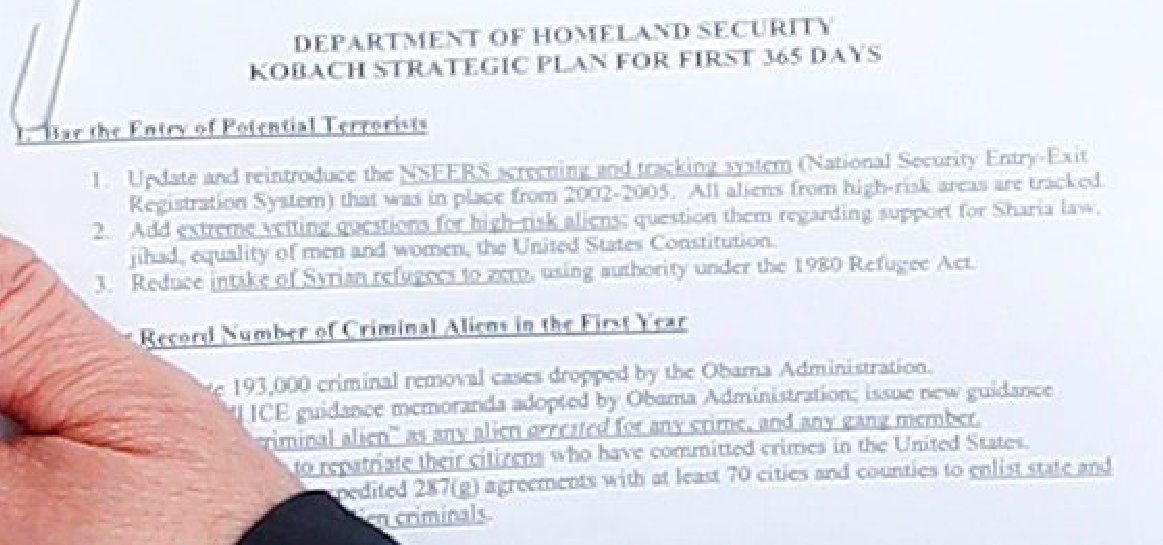
Extreme vetting.

You go to the airport, are asked about your views of “Sharia Law.” How do you answer?

You?

Sharia?

Kris Kobach, the Secretary of State for Kansas, who let’s face it, if you are Muslim, hates you and hates your family, has the ear of the President-Elect.  Mr. Kobach is also exceedingly sloppy when it comes to walking around with government documents.

What does it mean to be “high risk”?  Does this apply to you and your children or does it apply to “other people?”  If we agree that Sharia, which is the practice of Islam, is somehow bad, can we get off the hook?  People who dislike Muslims are also trained to think that all Muslims lie anyway.  So if you say you like Sharia, or don’t, if you are considered a Muslim, you are stuck.  Much of this is not quite clear yet.  Things are going to get worse before they get better though.

Islamophobia as a system was not absent from the Federal government during the Obama Administration.  It is clear it will be more overt and the FBI, which is full of Trump supporters largely because of institutional Islamophobia, will feel like it has freer rein to exploit the most vulnerable in the Muslim community.

However, there is good news.  Sharia in your estate planning is not going anywhere, assuming you want it or have it.  The Federal government has absolutely no power to ban it.  The constitution does not grant the federal government the ability to govern inheritance issues.  There is a taxation power for transfer of assets, but that is about the extent of it.  The Trump Administration wants to end that taxation anyway. Furthermore, state law continues to allow you to distribute your estate largely however you want.  If you live in a state like California, not a whole lot will change.  In other states, it is certainly going to be the case that those who dislike Islam know the electorates in those states are behind them, and that turning the screws on the Muslim community may be a winning strategy.

Thankfully, this is very unlikely to happen in California, much of we west coast or the Northeastern United States.  For others, brace for a difficult few years with state legislatures and local governments.

Wherever you live though, there is absolutely no need to apologize for who you are and what you believe.  If you believe in Islam, you should feel free to practice Islam, which includes inheritance, regardless of what papers get shoved in the President-elect’s face.

Don’t allow any angst or fear prevent you from acting justly with your family members.

On Muslim leader “nobility”

October 24, 2016 By Ahmed Shaikh

I wrote yet another article on Countering Violent Extremism called “the Muslim Lords of CVE“- please do check it out.

As many of you who have been reading stuff I write (thank you!) know, I have been interested in corruption among Muslim leaders for some time, particularly when there is government money available for leaders to influence what Islam is and what it is not.  This has made some people angry, but not too many.   We have a First Amendment in the US Constitution that provides for religious freedom, and it is worth defending.  This is the same freedom that allows us to do Islamic Estate Planning.  We don’t have an official Islam in the USA.  The government’s excessive entanglement with religion on “national security” grounds and the creation of an industry of Muslim Security contractors who pose as leaders and activists inside the Muslim community is a dangerous development.

Please read it.  If you like it, share it.  In any event, please feel free to comment and let me know what you think.


  • « Go to Previous Page
  • Page 1
  • Interim pages omitted …
  • Page 21
  • Page 22
  • Page 23
  • Page 24
  • Page 25
  • Page 26
  • Go to Next Page »

Primary Sidebar

“Learn about the fara’id (Islamic Inheritance) and teach it to the people”- Hadith

Get our free Islamic Inheritance Resource Guide, including templates and the know-how you need to start protecting your family.

Download it now.

Recent Posts

  • What Is Baitul Maal, and Why Does It Receive Inheritance in Islam?
  • On Blogging Theology on Charity
  • Private Retirement Plans for Muslims: A California Legal Exemption Strategy
  • Free Loans for Muslim Family Members Have Secret Interest, Not Riba
  • Muslim Burial Challenges

© Ahmed Shaikh, Attorney at law. No legal services or advice provided without a written agreement.

  • Home
  • Islamic Estate Planning
  • Blog
  • Library
  • Contact Us